Vents, grilles and the connections behind them
The part of the system people actually see, and the connections behind it that decide whether it is quiet, sealed and set square.
Set level, sealed and secured
A grille that is out of level or a diffuser that is not sealed undoes the work behind it. Terminals are set square to the ceiling or wall, fixed back properly and sealed at the joint.
Supply and extract terminals are set to the room they serve, not to a standard spacing.

Rigid, flexible and everything between
How a terminal connects to the duct decides how much noise the room hears and how much air is lost before it gets there.
Making the joint properly
Rigid and flexible connections made to the duct, sealed and supported so the terminal is not hanging off the ductwork.
- Rigid and flexible connections made and sealed
- Terminals fixed back independently of the duct run
- Insulation and sealing finished at every joint
- Noise and vibration checked at the terminal
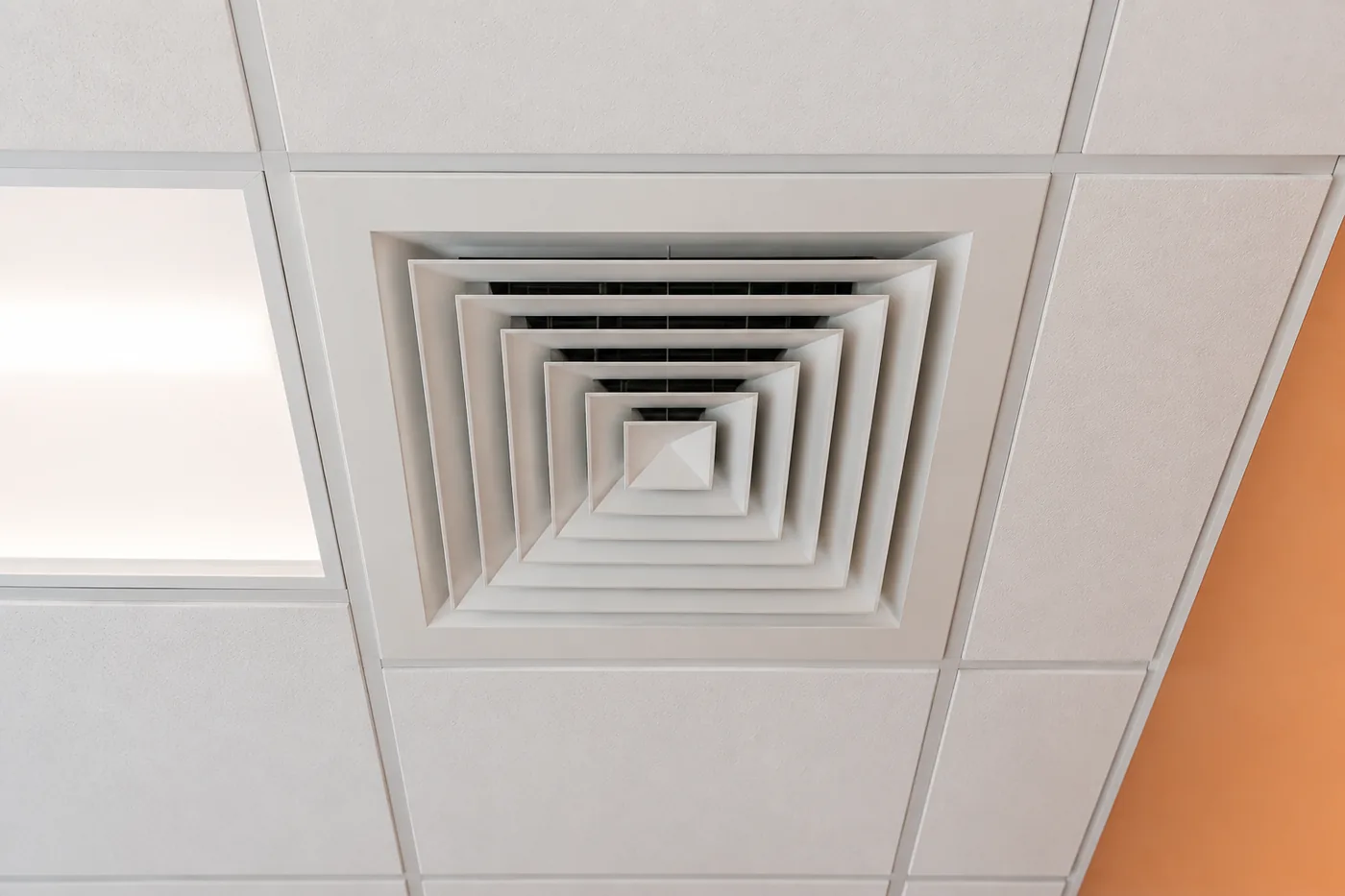
What we supply and set
The components most jobs need, each one chosen to suit the route and the room.
Set level. Sealed at the joint. Checked for noise.
Vents and grilles questions
The questions that come up around terminals.
- Can existing grilles be replaced without touching the ductwork?
Usually. If the duct behind the terminal is sound, the grille can be changed on its own. If the connection has failed as well, we will tell you once it is open. - Why is one room noisier than the others?
Usually airflow through an undersized terminal, or a connection that is transmitting vibration from the duct. Both are visible on a survey and both are fixable at the terminal. - Do you set the grilles to a particular pattern?
They are set to the room: level, square to the surface and aimed where the air needs to go, then balanced with the rest of the system.
Need terminals fitted or replaced?
Send us where they are going and we will look at the duct behind them, then quote the supply and the fitting.